Wednesday, November 28, 2018

RErideD: Seriously, What IS the Trout Theory?

Yoshitoshi ABe is my favorite illustrator bar none, and the number one name I look for in talent involved with anime. Serial Experiments Lain, Haibane-Renmei, and Texhnolyze are unique masterpieces even though ABe's involvement was highly varied between them (He actually wrote Haibane-Renmei, but was more of a character designer on the other two). Even the one I didn't like was at least interesting. With the project Despera still sitting in a seemingly endless development hell for over a decade after its announcement due to the anime gold rush drying up, the only audience expressing interest being the Americans, and director Ryutaro Nakamura dying of cancer, ABe eventually had to attach himself to another project.

Fifteen years to the month his last project ended, RErideD: Derrida, Who Leaps Through Time hit Crunchyroll with ABe's original character designs in tow (And three of his illustrations in the closing credits). And... well, it is nothing like the other series he's been involved with; that is, it is a generic, uninteresting piece of sci-fi junkfood programming riding on the coattails of Steins;Gate, itself fading from popularity and having a prequel released the previous season to little fanfare. In fact, RErideD might reach back in time more as a generic anime series from the mid 2000's anime boom where individual volumes have sat in Right Stuf's discount bin for over a decade, forever unloved. It might be too cruel to call it a Glass Fleet as it is too good for that. At the very least watchable, what it lacks is a script that is interested in more than what's in front of it, which almost garners a certain charm as it goes along. Perhaps it's more of a Heat Guy J.


I could go by my blog's namesake and spend hours sifting piece-by-piece through the work to say what exactly is wrong with it, but there is one question that pretty well sums up the series: What is the Trout Theory? Obviously, this needs explanation. Every time travel boilerplate at least has some kind of basis to which the traipsing about space-time hangs its hat on. We don't know what the Flux Capacitor exactly does to create time travel in Back to the Future, but we know what it is. There is hardly a time travel story that doesn't have some long-winded explanation of how they're doing it with various levels of confidence.

In this case, main character Derrida Yves is a scientist who, in his younger years, wrote a paper on Trout Theory, which explains how a person may time jump. We learn next to nothing about what's actually in the paper until the final episode, except that is has problems and was written off as the dreams of an eager college kid. As Derrida begins to time jump in earnest, he doesn't even know how he's doing it, and the rules aren't explained until around 2/3rds of the series' running time. The world building and the overall texture are dealt with in a similar manner, feeling like a show where someone tripped and lost pages of the script out a gusty window.

But let us go to the beginning of the story, where Derrida is a citizen of a futuristic country (If it has a name, it doesn't matter). He's an AI developer living in the shadow of his father, who proliferated the use of robots in everyone's daily lives. With his friend Nathan, they discover a catastrophic bug in their new batch of AIs (Called DZs) where their programming will cause them to go berserk if a large enough number of them are given a single command at once. Since war utilizing masses of DZs is a constant thing here (Between who? Places that are maybe close by, I guess....), that this incident will happen with combat models is a near-certainty.


On the birthday of Nathan's 8-year-old daughter Mage, Derrida tries to get the pieces in place to stop the catastrophe, but not before Mage engages Derrida in a weird discussion about continuing his work on time travel. Unfortunately, the head of the company, Hans Andrei, is already quite aware of the bug, intentionally made it as such, and has already shipped out the faulty models around the world to cause the robot apocalypse and control what's left. Andrei sends men to kill both of the scientists, only succeeding with Nathan. Derrida is helped by a supposed guardian angel named Ange who appears out of nowhere with the sound of clocks and guides him out of trouble, tumbling into an abandoned cryogenic chamber facility where he just lays down onto a random bed that activates and causes him to fall asleep for ten years. If you can guess the secret behind Ange, you've watched a series with plot twists before.

Derrida awakes in a somewhat watered down Terminator future where he's surrounded by DZs that kill anything that gets close, but fortunately for him, there's still a decent amount of human civilization left. In fact, the city he lived in is still pretty intact with a few walls. But as a scientist who hasn't exactly mastered self-defense techniques, he hires a handler to protect him. There are a bunch of jack-of-all-trade mercenaries here who take care of whatever task they're assigned; mostly, the violent kind. In this case, he runs across Vidaux, a former police officer who makes enough bank to have sassy talking car Graham (sass is set to 2, but it's there) with tactical weapons and babysitter support for his seemingly adopted daughter Mayuka.  Derrida's re-appearance trips off alarms with Andrei, who immediately sends out his own mercenary in Donna, the supposed deadliest assassin of the area.


The rest of the series is a chase involving Derrida, Vidaux, and Mage's childhood friend and shutterbug Yuri to find Mage, who has the patch file to fix all the DZs. You might ask where the time travel is in this time traveling show. During downtime, Derrida starts experiencing what he calls time rides where he will go back in time for a couple minutes. Unknowingly at first, but then one of his daydream-esque time rides changes history a smidge to where he everyone is pretty sure he was late to a party he remembers being clearly on time for. I'm not sure how much I should reveal since it doesn't explain the rules until 2/3rds of the way through. What it amounts to is Derrida can only go back in small moments and he gets yanked to the present unceremoniously if he tries to do something too large to affect the timeline. He can put something in his pocket he didn't have before, but he seemingly can't prevent the robot apocalypse.

This is by far the most straightforward series I've seen ABe be involved with. Even with time travel, it moves like an arrow through the plot, taking on only what chooses to get in its way at the moment. There's no need to establish the city, the country, or even the world much because it doesn't matter. It's somewhere, someplace in a futuristic world. While I'm sure there is a boatload of information about everything in this world that was shared with the development team, very little of it is portrayed in the series. It has very little in the form of subtext, it constantly skips over potentially important details, and there are constant moments where I'm not sure if they're trying to imply something and making it a red herring, or if the writing is simply bad. I'm going to have to go back and look up what the freelancing job Vidaux and Donna do is called, because it's brought up and once it's established as only a means to explain what they do, it doesn't have any relevance anymore.

There's no texture, very little world building, and all of it is so broadly scoped that even its attempts at giving character smaller insights just vanish or are meaningless For instance, Mayuka is an avid reader who is left to bond more with Graham than Videaux as he's constantly on missions.The first book we see her reading is Pinocchio, possibly implying she's less than human. This would make sense since there's been a big advancement of robots doing human jobs and one of the characters' arcs includes an experiment where they try to make an android interact like a human. No. She's a normal girl. And I'm still not sure when they came up with Donna's backstory as it was made to explain why she goes crazy sometimes and is obsessed with eliminating Derrida. The trick in this instance is she never really DOES go crazy in the way the backstory suggests she does. She's a professional assassin who fails in her first attempt at her job, is constantly getting interfered with by other assassins Andrei sends because he's an asshole who throws money at everything, and she has a temper about it. It doesn't need the backstory she's given, and when it plays out, it feels like a way to write her out of the plot without the characters we like doing something that would dirty their hands.


But I'm getting too close to the series. This is not a show about micro inspections. These are characters that wear everything but the specific tragedy that got them here on their sleeves. We aren't meant to ponder the world around them as anything more than a situation that has to be resolved. Taken in that respect... it still doesn't work. It's watchable and there's a charm to how much the major characters get stuck in their own little world where seemingly nobody else exists for long stretches at a time, but it's sure not good.

I'll just say it: The writing is LAZY. When Derrida goes to the abandoned cryogenic facility, he randomly lays down on a bed that randomly turns on and randomly puts him to sleep for ten years. Even with what we learn later with Ange, that's still a lot she didn't and couldn't have control over that just happens because the plot requires it to. When Derrida has to sneak in his old office, they cut details about how they show up in their old city that's been walled off, get disguises, and saunter through the most lax security of any corporation that controls the fate of the world I've ever seen. How little they establish of how the world works makes it easy to get ahead of "surprise" plot twists. Of COURSE the semi-truck is going to play a role later. It's the only other vehicle they pass in the entire damn wasteland! Oh yeah, and don't act so bloody surprised when Donna constantly finds the one giant talking car driving on the few remaining main roads. These characters kind of have the incognito skills of Inspector Gadget. At least the series realizes that part eventually as they try to quietly venture into a new city and are instantly found.

The character interactions are fine, but they never reach above surface level on anything. Derrida thinks his father finds him a disappointment and keeps him at a distance because of it. Would you believe me if I told you that wasn't true and Derrida finds out in one time jump? Of course you would. Half the time travel stuff from Chrono Trigger to Frequency features some kind of reconnecting with a parent. What surprises me is how they didn't take more from all the other time travel stories. I'm guessing this likely is because of the nature of two of main characters.

We don't learn a whole lot about Mage on the quest to find her except she's smart as a whip and she undertook her mission not only to save the future, but she secretly loves Derrida. There's also the suggestion Yuri falls in love with him as she journeys with him. Keep in mind that in what was essentially yesterday for Derrida, these girl were 8 instead of 18. It thankfully keeps all of this at arm's length, but that also means nothing interesting happens between them. I'll admit Yuri gets one really good scene where she tries to deal with her conflicting feelings over fixing the past and losing everything she's come to care about on this journey, but that's about it. There's a really cool idea about Derrida and Mage in the future only being able to meet in the past, but again, it's never really broached. Series writer Kenji Konuta is pretty solid with baseball manga adaptations (Ace of the Diamond, Major 2nd). With imaginative sci-fi? Even writing a couple episodes of Texhnolyze, not so much.


By the end, there are aspects that would work if it was in a better anime. Its main message about how it's the small things that change the future instead of the wider actions would be more well taken if the series actually had smaller things. Andrei is revealed as a completely incompetent villain with no menace. Is he a commentary on Donald Trump as an idiot with horrific blonde hair who only holds the illusion of strength through throwing money and influence for people to hide behind? The bigger question is does it matter? The answer is no. After being established as THE major threat, he disappears for awhile before he's casually removed. Some guy from a seemingly one-off episode takes over with no energy or urgency to the ticking clock in the climax even when it remembers, oh yeah, there are armies of deadly robots EVERYWHERE. What happens follows story threads, but I only cared at the very base level that you care about characters. It's not that I didn't give a shit about them; it's that there's not enough here to grab onto.

Really, that's the big flaw here. The artistry is average with nothing that pops out, and the animation, backgrounds, music, and the acting are workmanlike. Even ABe's designs have all of their artistic edges smoothed out and are made bland in translation to television. The best looking part of the series is the ending credits which are just three drawings from ABe given digitally animated snow. The music works and I don't know how much else to say about it. Even similar series of similar modest aims like Plastic Memories had more ambitions, more thought into the world, and more ways to twist the premise emotionally. Here, we have one episode about an experiment where they attempted to see if they could make a robot behave like a human that's fascinating, but it is on an island. Everything else started average and ended average.

You have to go back farther than Steins;Gate to be able to find an audience for this. Maybe early 2000s when there wasn't a whole lot of anime and the basic pleasures have more resonance because everyone hasn't run this maze a time or ten. The opening and closing have that emotional grab that would be effective if it didn't remind me of a half-dozen much better series I could be watching. I can say even as something I've been waiting 15 years for, it didn't make me angry even if I was disappointed. If this is one of your first anime or one of your first sci-fi series, I could see liking it a bunch. But it can't go back in time and be that magic 2000s entry-level anime. Even then, I'd still recommend Serial Experiments Lain.

Sunday, January 5, 2014

Holiday Shuffle: Saving Mr. Banks


Quick, the wind chill's going to drop to -40 by the end of the weekend! I have to see something and then shut myself in my room until the cold goes away… or until I have to go to my real job. Um, uh, let's see… the making of Mary Poppins one. Sure!

Up front, I should tell you that I have little connection to the movie Mary Poppins. I watched it a long time ago and I sang "Chim-Chim-Cheree" as part of a choir in grade school, but other than that, I don't have memories of it, fond or otherwise. I don't have a particular reason why and I'm not about to psychologically prod myself, but I don't have the same sense of nostalgia from Disney's live-action movies other people do. The best I can say is I grew up when Disney flooded the market with some truly horrifying live-action features (Jungle 2 Jungle, anyone?) and then started remaking the ones that weren't that great to begin with and then made them worse (That Darn Cat), so perhaps that put me off them which also had the side effect of pushing aside the great ones.

Hey, you need views from all sides, right? I'm sure there are plenty cinema who people who know Mary Poppins by heart who've chimed in already, so why not from this angle? At its heart, it's still one of those behind-the-scenes things that talks about how much trouble went into the making of a beloved classic and yet things all came together and we have what we have now. People who love Mary Poppins will get all the in-jokes and references and will enjoy tremendously talented actors taking on the roles of the creators. On the other end, people who come from that perspective tend to dislike the "second" movie within it that explains the real story of what inspired the novel, which is told through flashbacks. What struck me was how absolutely necessary this part of the story is to the rest of it working.

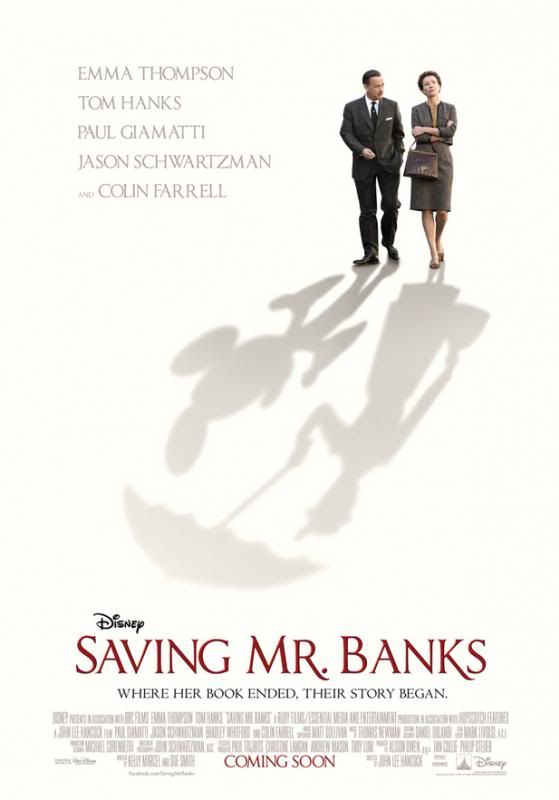
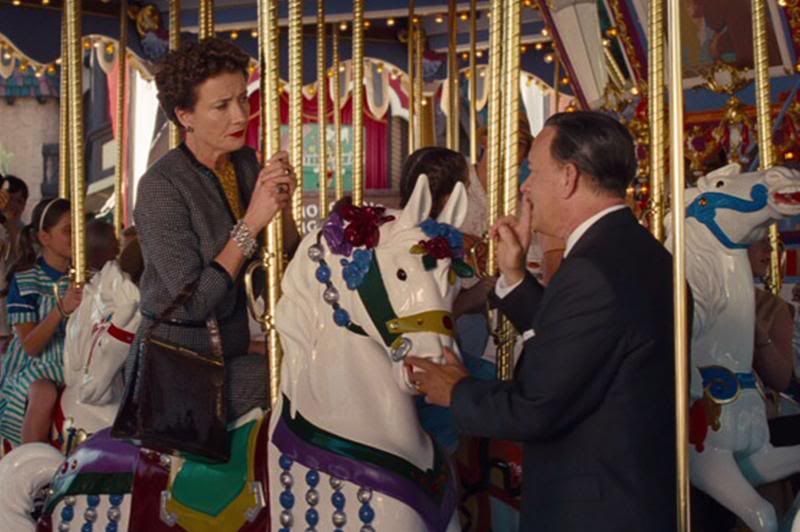
Saving Mr. Banks tells the story from mostly the perspective of Poppins author P.L. Travers (Emma Thompson). After 20 years of being courted for the film right by Walt Disney (Tom Hanks), she has to force herself to fly to Los Angeles to finally discuss the matter when her royalties have dried up and she has no new novels on the horizon. Aghast at the what the filmmakers are planning, she records all their conversations during the development and makes heavy, sweeping demands (No musical numbers, Mr. Banks must not have a mustache, no use of the color red, etc.).


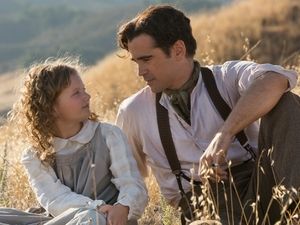
While this plays out, we get flashbacks to Travers' childhood in rural Australia. They mostly revolve around her father (Colin Farrell), the inspiration for Mr. Banks in the novel. There are the little touches that inspired the movie, but they have a much different feel with a distinct lack of whimsy and magic. It is an almost cold reality even as the father tries to be as charming  as he can be. Why it's important is to give real weight to the reason Travers finds this whole idea of a Disney version so appalling. At one point, they play out the "Fidelity Fiduciary Bank" song as Travers remembers the events that inspired it, and they're so wrenchingly different that it shows why the last thing Travers would want is her work to become a "cartoon." At least in the movie. This is a dramatization, after all.

The person who inspired Mary Poppins doesn't even show up until 85% into the movie, prompting questions as to why, and the answer is really the emotional anchor that drives this movie home. I cannot begin to disagree with the people who think it should've been excised and dealt with via monologue because its tone doesn't jive with the rest of the movie. That's the point. Through the film, Walt tries to appeal to Travers as he was a penniless artist who once faced the prospect of selling his characters to a very rich man and refused, but it's dealt with in monologue and it's not as effective. I think there's a greater film that adds flashbacks to a young Disney dealing with that situation and then turns around to him as an adult on the other end of the table. However, I can see why reducing someone as larger-than-life as Walt Disney to this as a defining moment would seem short-sighted. Also, this is pretty much Travers' story.


So, yeah, the rest of the movie that makes up most of the ACTUAL runtime? You know, the movie everyone's going to see? It's mostly fine. It's not Supercalifragilisticexpialidocious (Thank you, IMDb!), but it delivers the movie most people are expecting. Emma Thompson is pretty much perfect, Tom Hanks is a very solid Walt Disney, and the craftsmanship is very workmanlike from the reliable director Johnny Lee Hancock (The Blind Side). Really, the only big flaw is composer Thomas Newman seems to take awhile to get the right blend between the score inspired by Mary Poppins, sixties jazz, and the score's main theme. Some parts of the score seem to stop midway and switch to something else entirely. It settles down eventually.

Delivering on what people expect can work against a film, though. It's almost like going into a movie after seeing the trailer that explains the whole thing without actually seeing the trailer. There's a big checklist of things movies like this handle and sometimes it feels like it's just going down that list. Cover all the trivia on IMDb, check, make silly in-jokes the characters don't know about yet, check. The one genuine surprise is a small subplot involving a driver played by Paul Giamatti. I won't say anything else, but just keep watching it. It's surprisingly one of the most touching things here.

It probably won't get a lot of award hype just because it mostly hangs out at a "good" level, but I don't see why this shouldn't affect an audience's enjoyment. Sometimes, things aren't a competition. Good is good, bad is bad, and this is pretty dang good.

Wednesday, January 1, 2014

Holiday Shuffle: The Secret Life of Walter Mitty


There are a little over a half-a-dozen movies I've been needing to see over the holiday season that I haven't been able to catch up to thanks to a busy job schedule and well, you know the saying, "Life happens?" Life has happened a lot to me. So now, with my schedule looking to be somewhat clear in January, it's time to knock out all these movies I need to see (NEED, dammit!). So, while I tend to ramble to extreme amounts, I'll probably have to cut it down to get all these movies covered. I ain't got time to bleed… well, except when I have extremely chapped lips in this winter weather. Then I apparently have plenty of time to bleed.

First up: The Secret Life of Walter Mitty, an adaptation from a James Thurber short story that's been in development hell so long, the logo for Samuel Goldwyn Films-a company that used to grace many a late 80's low-budget title featured on Mystery Science Theater 3000-helps open the movie. I can say I can understand why Ben Stiller's directorial comedies have more than a decent following, but as much as I can credit Stiller for being the rare comedic director who can make his movies look fantastic, I don't really like them. There are parts of Zoolander and Tropic Thunder that are brilliant and if you showed me certain clips or shared certain lines, I'd laugh. But even as much as they are extremely out-there satires, they have to be grounded in some reality, and well, let's just say the central conceit of Tropic Thunder falls apart if you actually think about it. The footage from randomly putting film cameras in the jungle would look more like horribly-framed hold-up footage from a Circle K than something for Roger Deakins to put on his demo reel. I know I know, it probably doesn't bother you. It bothers me.

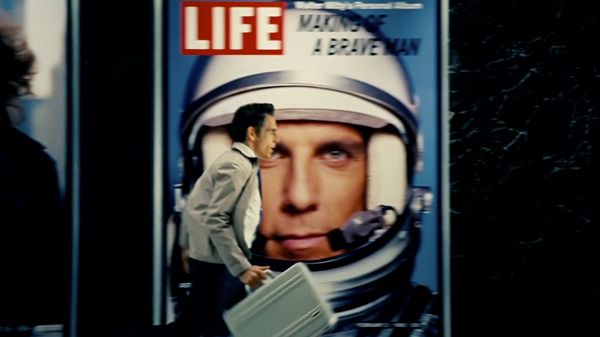
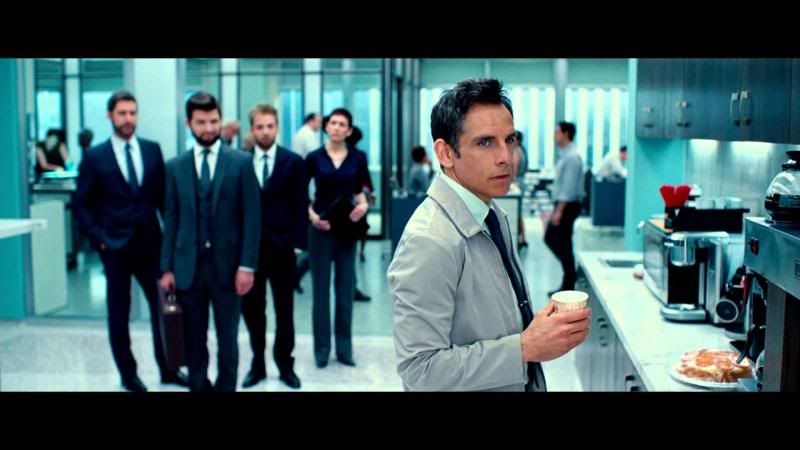
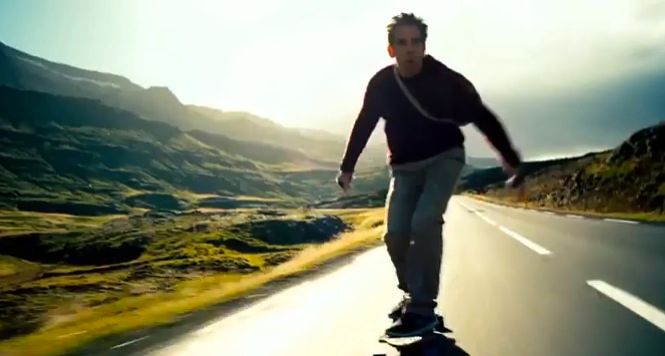
Maybe Walter Mitty is the most logical step for Stiller. Directing and starring as the title character, Stiller's film covers the life of a man so isolated by the doldrums of a working life as a Life magazine photo negative manager, he often "zones out" into extreme fantasies where he dives into exploding buildings to save the three-legged dog of his co-worker Cheryl (Kristen Wiig). Think Doug from Doug as a working stiff. When the negative for the final cover of Life magazine is apparently missing and his job is threatened by a nasty downsizing manager (Adam Scott), Mitty has to take the plunge into the unknown and follow the elusive photographer (Sean Penn) who took the shot to Greenland and beyond.


So, we have a character who goes from outrageously and comedically overblown caricatures of life to something deeply real and tangible. Sound like a good transitional movie for Stiller, and for the most part, it is a very worthy title I can see a lot of people picking up out of the blue and getting a lot out of. Stiller's visual sensibility is taken up a notch with beautiful surroundings and heavy inspirations from the world of photography (One particularly nice shot is even framed so it looks like it's on a negative roll). Stiller himself provides an understated but still human vibe in his performance and aside from the mustache-twirling villain (Or in this case, hipster beard twirling villain), everybody has a lovely, down-to-earth charm. The main coupling between Walter and Cheryl, despite some trimmings of a cutesy Hollywood romance, has some large chunks of a real relationship, which is less typical of a movie than you'd think.

It IS a transitional movie, which means there are hiccups. The biggest problem probably lies in the ways the movie got financed. There is annoying product placement in movies, there is the distracting plastering of Fed Ex all over the otherwise superb Cast Away, and then there is the product placement in The Secret Life of Walter Mitty. One of the big flaws is the early fantasies of Walter Mitty are more like Family Guy non sequiturs because we know so little about Walter starting out that it doesn't resonate to much more than using a lot of money to portray a guy spacing out. There is information about Walter given at one point that he was an ace skateboarder as a child and then he transitioned into a more normal life after his father died. The reason we don't get more about what happens is that his father's death is immediately linked to the time Walter worked at Papa John's Pizza. Papa John's pizza is heavily worked into the character's backstory. I am not making this up.

The movie doesn't stop there. A supporting character is a customer assistance operator at eharmony.com (Patton Oswalt) who is trying to help Walter fill out his dating profile, and it makes the site sound like the most helpful dating stop in the world. It's not enough that this movie had to feature products, but it has to make them sound like the most awesome thing ever. The characters don't just have to have Cinnabon, they have to make comments about how it's the next best thing to heaven. If you're going to pleasure your sponsors so much, can you at least hide your kneepads?

Even if you took out the product placement, there would still be some issues. Mitty's journey into the world seems far too easy. Yes, Mitty jumps from a helicopter into shark-infested waters and other fish stories, but it's the mundane stuff they simply don't address. Mitty travels overseas for the first time in his life and has no problem with jet lag? How does he have a passport or how does he get one so quickly since he has only traveled to Phoenix in his life? How does he know exactly where to go with no problems the moment he gets to Greenland? He has to pass along three Arabic words to someone over the phone, and yet the person in New York can spell these odd foreign words without any guidance? And how is he talking so easily on the cell phone, anyway? He doesn't get another cell phone that's more Euro-friendly, yet it has perfect signal his entire journey, even when he's deep in the Himalayas? It's a good thing this movie doesn't have a major cell phone carrier as a sponsor, or there'd be an extra 3 minutes tacked onto the narrative spouting the wonders of whomever's handy mobile devices and unparalleled signal strength helped him.

It sounds nitpicky, but when your movie's about finding the wonder of life by living in the real world, it would help if the journey felt a little more real. It's not just the little things. At one point, Walter has to escape an Icelandic village after he realizes a volcano is erupting near it. The climax of the scene would fit right in with Dante's Peak and it gets shrugged off with surprising casualness. Even without the fantasy world, Stiller can't resist some extra flourish at times.


The core of the films works, though. Its heart is so much in the right place despite being wrapped in promotional consideration. There are things to enjoy and even LOVE out of this movie. A magical moment occurs when Walter has to convince himself to jump onto the helicopter with a drunken pilot as his only chance at finding the negative when he imagines Cheryl grabbing a guitar and singing David Bowie's "Space Oddity" to motivate him. it's the moment where his fantasies become the engine to move his life forward rather than his roadblock. It is not a thoughtless movie being churned out by a factory. It simply has trimmings that make it feel that way. Unfortunately, because they are rather large trimmings, I only like you, Walter Mitty. LIKE.

Also, random detail only people like me would notice: José González is one of the composer and his song "Far Away" is featured twice in the movie. Why does this matter? Because it was also used prominently in Rockstar's critically-acclaimed and brutal Red Dead Redemption. I was waiting for Ben Stiller to start blasting away at some banditos.

Sunday, December 15, 2013

The Desolation of Smaug: Hobbit Movie or Metal Album?


Let's get some things out of the way: I am annoyed with people right now who who are either doing one of two things: People who won't shut up about the over-indulgent length of The Hobbit movies and people thinking they're funny because the pronunciation of Smaug is weird. Those dead horses have been beat to dust. Move on.

Maybe it was because I'd been seeing a whole bunch of two-and-a-half hour movies in a row, but An Unexpected Journey was actually one of the breezier experiences I had last winter. Of the brutally long titles I saw at the time, it was easily the most cinematic. For all of Lincoln's accomplishments, it felt like a TV mini-series and Les Miserables was more interested in how much snot was in the acting talent's noses most of the time than the epic feel. Perhaps returning to a cinematic Lord of the Rings experience was a nice visit from an old friend I hadn't seen in awhile, but as much as one can debate how the source material wasn't made for three jumbo-sized movies, I could appreciate a prestige movie that wanted to actually be HUGE.

It has its slow spots for sure and the climactic hullaballoo in the goblin tunnels probably needed to be reeled in a bit because it felt too much like the characters were pinballs bounding about an endless arcade machine, but the movie was fine. Not GREAT, but fine. Young Bilbo Baggins (Martin Freeman) and Thorin (Richard Armitage) were more than worthy to take the reigns as lead characters, there was enough done to distinguish the massive amount of dwarves from each other, and the experience didn't feel like it was being weighed down by being "too large."

For the follow-up movie, The Desolation of Smaug, audiences who had a bitter taste in their mouth seem to like this one quite a bit better, but for me, this movie feels more like it was built from a Lord of the Rings "factory," constructing a reliable product based on past success more than any of the other films. It doesn't change it from being a quality product, but Smaug's characters and action certainly have a sense that I've seen most of what it has to offer before.

I think what attracts a more general audience than the first movie is that it's more geared towards the me in middle school who had to read the book to pass English and skipped a lot of the things I deemed "insignificant," like all the songs. Not to say in general people act like they have only a middle school education (Okay, maybe a little), but the first movie wanted to absorb itself in the world, the culture, and the song, and some people just wanted to get on with it. Desolation of Smaug gets the HELL on with it.

 After a brief prologue, we're right in the action as the band of Dwarves and Bilbo are on the run from orcs while on their journey to the Lonely Mountain. With Gandalf (Ian McKellen) given a, "Let's have Gandalf do something else so we don't constantly have the, 'Why doesn't the wizard fix it?' plot hole" task, the group is on their own to make it through a forest of illusions and beyond. The story lines are obstacle courses more often than not. Something is put in their way and they have to figure out a way around it quickly because orcs are chasing them. This usually leads to an action set piece and then sometimes peeks in on Gandalf as he foreshadows the movies we've already seen.


It might be kind of an insult to say that's all the movie is, but if the movie is all business, it does its business well… wait, that didn't come out right. Anyway, if the first Hobbit movie lacked any signature action sequences save the goblin one I said was a little too big for its britches, this one has plenty of them.

 I'm one of those people who feels spoiled when the advertising for the James Bond movies tells you all the action you can expect because I sit there silently knowing what's to come, so I won't say much except that it tries to put ordinary LotR action sequences on steroids. Sometimes it doesn't work and the dwarves who are the underdog heroes come off as superhuman, but there are some glorious moments of creative flair. In a river rapids chase, there's a continuous shot that comes out of nowhere and keeps chugging along with the ridiculously fun charge of a Road Runner cartoon. It's sounds out of place, but it completely works and totally makes the sequence.

Most of the rest is what you've come to expect from a Peter Jackson Tolkien movie. The locations are all the grandest and most spectacular locations EVER (By the way, visit New Zealand when you get the chance). It's almost a shame they waste the forest of illusion so early, as it is something freakishly different and made properly creepy. The actions of the characters are broad, operatic and almost open themselves up to parody (At one point, one of the dwarves in love sees the object of his attraction in a completely over-the-top heavenly glow). Howard Shore's majestic score is the same as it ever was, not adding many new themes to the repertoire.

The same can be said for the characters. There are new ones to be seen, but they feel like copies of ones from its predecessors. Lee Pace is an awesome and underutilized actor in Hollywood (Watch The Fall if you don't believe me), but he seems dutiful as yet another pragmatic elven leader who doesn't want to stick his neck for people not of his own kind. There's another badass woman warrior named Tauriel (Evangeline Lilly) and the series can't get enough of those, but she kind of comes off as a fan fiction character where someone went, "Oh yeah, well, I'm going to make a female Legolas, but she's going to be so much better! She's going to be like Legolas TIMES TWO!" Stephen Rea does briefly show up as a manipulative leader of a lake town and there are some interesting angles as he tries to be as humorously Machiavellian with his people as possible, but like I said, it's a rather small role.

Even the confrontation with the dragon Smaug seems to be an echo of the scenes with Gollum. While it eventually builds to a wholly satisfying and breathtaking climax, the initial conversation between Bilbo and Smaug made me pine for the conflicted, split-personalitied Andy Serkis character rather than the simple, smooth egotist voiced by Benedict Cumberbatch with extra bass. I know, how else are you supposed to act if you're a goddamn dragon who sleeps in piles of gold? Maybe I've just seen Cumberbatch's brand of villainy too much this year.

To put it simply, Desolation of Smaug is the movie you expect it to be. Maybe too much of the expected. It's still a pretty good movie and I seriously nitpick because it's in such good company, but it was the first time I wondered how much would've been drastically different and new if Hellboy director Guillermo Del Torro had gotten to helm this thing as originally intended. Oh well, you can't always get what you want, but if you try sometimes, you might find you get what you need.

And what do I need? The Desolation of Smaug actors doing a dramatic reading of Leonard Nimoy's "Ballad of Bilbo Baggins."

Sunday, December 8, 2013

The Work of Ryutaro Nakamura: The Glue

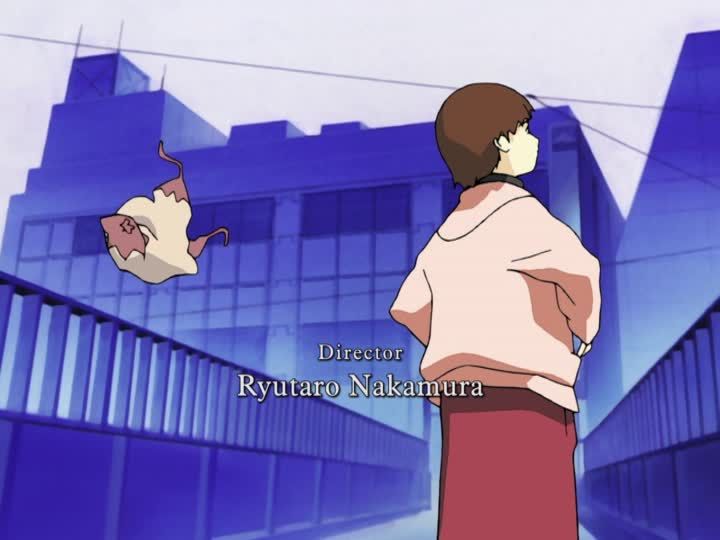
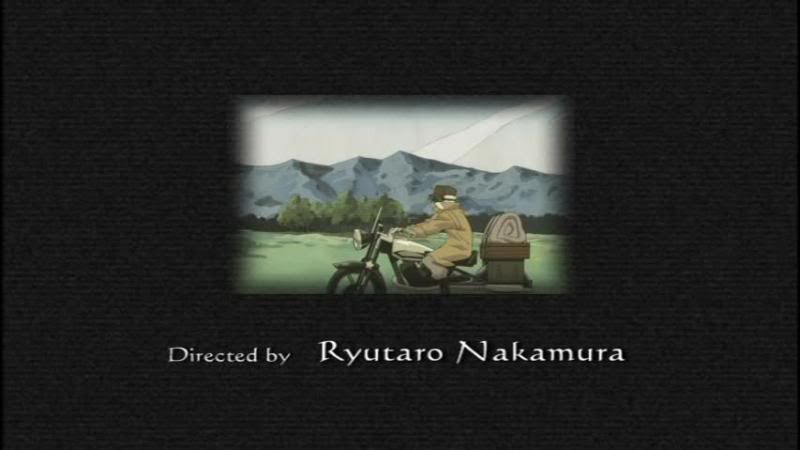
A few months ago, there was a small note on the passing of anime director Ryutaro Nakamura due to pancreatic cancer. It by far isn't a name that gets as much play even in the anime community and I had to check on the guy's works myself even though he did two series that easily make my top 10, Serial Experiments Lain and Kino's Journey.


I would've discussed his work closer to his death, but I put it off because I realized I had a gaping hole in not watching his series Ghost Hound. It's not really a series you can marathon quickly. Seriously, it's  on Hulu and I DARE you to marathon it. A little to my dismay, Ghost Hound actually adds little to the conversation so it's kind of time wasted, but oh well….

Back in the late 90s/early 2000s, there were a precious few pillars of anime that were holding up the small community of fandom. This was just before the days of bittorrent and WAY before today where you can legally stream even the jankiest of "I want to have sex with my sister" anime. If you were like me and had no idea where to even find anime bootleggers in the middle of someplace like Nebraska, you were kind of at the mercy of the rental shelves in your local comic store, and they had Akira, Dragonball Z, Neon Genesis Evangelion, and some extremely cheap and violent titles that would define the medium to teenage Americans for better or worse. Somewhere in the corner was Serial Experiments Lain, a cult classic of such supreme weirdness that many of its viewers recommended it to other people just so they could have someone else to help figure out what the hell it was they just watched.

Lain is like if David Lynch and David Cronenberg had an insane, Japanese cyberbaby. Obtuse, freaky,  and absolutely fascinating, it is a heavily atmospheric series about the ways the Internet has crashed into the real world. Utilizing pseudoscience, parapsychology, telekinesis, humans meshing with technology, aliens (?), and  two dozen conspiracy theories, Lain came out at just the right time as the Internet was about to explode into this irreplaceable piece of our lives it is today. Not to mention its American popularity was probably bolstered by having one of the greatest anime openings of all time headed by the song "Duvet" actually sung in English by British indie band bôa.  A friend of mine and I were once looking through blankets at a department store, came upon one with the label "Duvet," and simultaneously broke into ♩And you don't seem to understand…♩

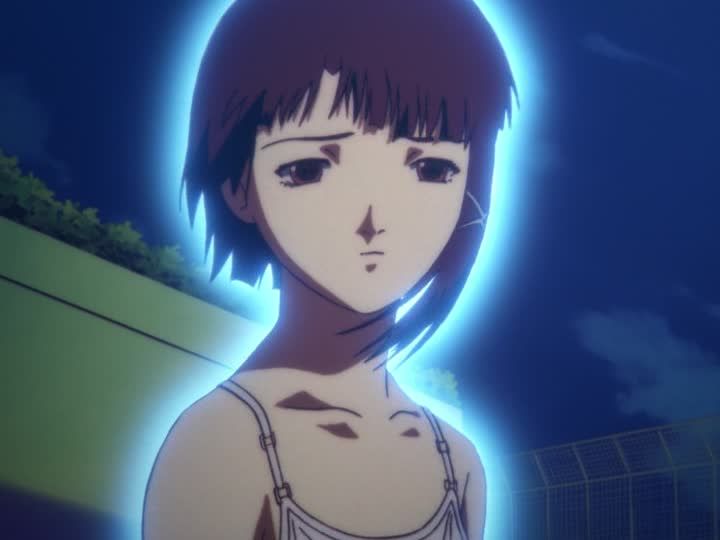
Getting into the brass taxes, the series follows a middle school girl named Lain Iwakura whose life is getting a little strange. She hallucinates invisible people walking through the halls, reality occasionally dissolves around her, she seems to be followed by mysterious men in black as she walks home, and most pertinently, an acquaintance has committed suicide and then after her death, sent an e-mail to Lain saying she downloaded her conscious into the Wired (This series' stand-in for the Internet) and that God is there.

Upon receiving the e-mail, Lain gets her father to upgrade her computer in order to plunge into the Wired and see what's going on. She discovers she's an adept computer user and diving through the information, finds a series of bizarre incidents happening in the virtual world that are breaching into the real world. At the same time, a second Lain has begun showing up in the real world. Where the first Lain is quiet, withdrawn, and awkward, the second is brazen, loud, and sociable to the rave culture.

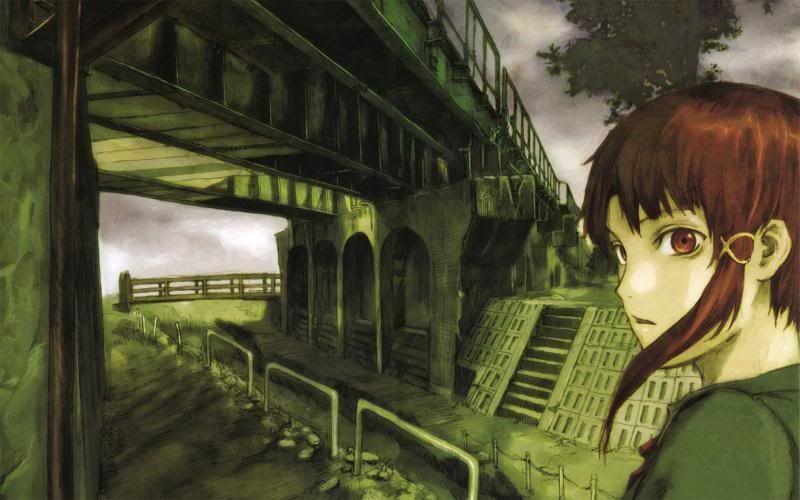
That's about as far I can go without completely getting off topic. We have to steer this back to Ryutaro Nakamura eventually, right? The series has the fingerprints of writer Chiaki J. Konaka. Konaka is a unique writer whose presence can be immediately felt, especially if the project is a collaborative effort. If you're watching an anime series that is straightforward and suddenly becomes ponderous, it's not quite clear what exactly is happening, and there's internal monologue about the nature of life or complex psychological/scientific concepts, it's probably Chiaki Konaka. Or Hideki Anno having another mental breakdown. The look of the series was heavily influenced by artist Yoshitoshi ABe (The capital B is his choice, not my error). ABe's work is very detailed, tends to use a lot of shadows, and is very eye catching, hence why it's all over the DVD covers. Here, you'll see what I mean:


Not bad, right? So, where does Nakamura fit? I find Nakamura tends to be the glue that holds his projects together. Not really an auteur, he seems to more realize the potential of a project and is able to deliver on the potential. If there are things I can attribute to his style, it's the use of overexposed light and uniquely weaving overlaying text into the narrative, but those can be attributed to his collaborators ABe and Konaka, respectively.

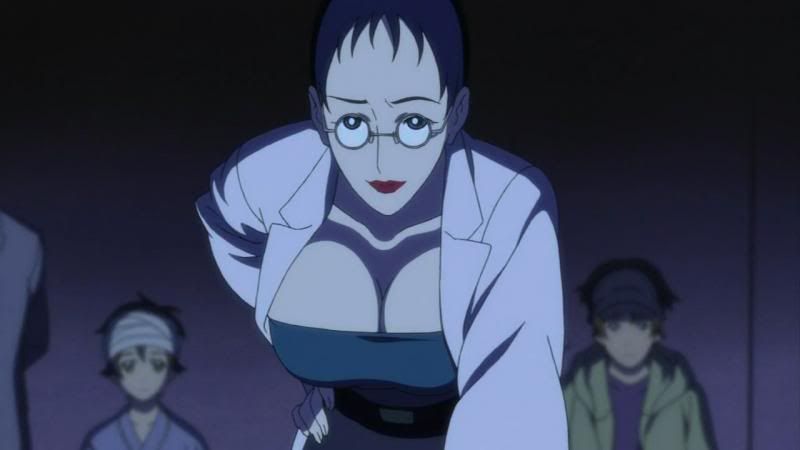
The problem with Ghost Hound, one of his last projects, is its lack of distinctiveness. The script once again is by Konaka who mashes in a smorgasbord of topics like out-of-body experiences, psychology, quantum physics, the spiritual world, bio technology, hypnotherapy, and God knows what else into a story of a kid who survived a kidnapping and can now leave his body and see the surprisingly busy spiritual world that exists in his quiet town. For the hodgepodge of topics that went into it, it's surprisingly very coherent, but that sentence describing the plot? That development takes three episodes when it normally takes about one. This is where atmosphere and character is essential, and the artistic direction is too bland to hold the atmosphere aside from the cool jazz opening that has more flavor in the first two minutes than the whole show combined. The characters aren't particular notable, so much so that around 5 or 6 episodes, in order to properly get information across, they have to call in… DOCTOR BOOBS!


Seriously. But still, when it comes to putting together something like Lain, all the credit in the world to Nakamura for being able to take something that has a difficulty rating of about 9.5 and delivering on almost everything. The character Lain sometimes gets lost in the shuffle which takes away some of the emotion of the overall project, but that Lain HAS some seriously heavyweight emotional moments at all with everything that's stuffed into 13 episodes is something of an accomplishment. Throughout the series, Lain develops a friendship with classmate Alice who only knows her as the aloof kid who could use some friends. Their friendship is valuable to Lain, so much so that later when she has more influence over the Wired, she tries to erase the fallout from a terrible choice Alice made, but in trying to help her friend, does more to destroy her emotionally. This dynamic is powerful and vital to anchor the series emotionally in its climax, and that this Nakamura can handle such a small but vital thing while still keeping the big picture in focus in one Lain largest successes.


Switching gears, Ryutaro had another masterpiece that hasn't quite made the impact Lain has, but some of us are working on it. I know anime is weird and foreign to a lot of Americans and there are few titles out there I can just tell everyone to watch right now. Kino's Journey is one of them. You. You right there. Your life would benefit greatly from watching Kino's Journey. It's pretty dang cheaaaaap! The best outcome is your life will change and the worst outcome is you'll find it kind of "meh."

Kino is as straightforward and earthbound as Lain is bizarre. Based on a series of light novels by Keiichi Sigsawa, the series follows the titular character as she travels with her talking motorcycle (Yes, the motorcycle talks! You'll get used to it!) to the various countries of a fantasy world, some pre-industrial and rustic, some with technology beyond what we have today. Each country has a story and Kino spends three days in each to discover it. It's hard to describe without watching it, but my best stab at it is a more down home Twilight Zone. The countries Kino travels to are largely built on one fundamental and the series does its best to turn it on its head, and while not telling you what to think, it emphasizes the importance of thinking about the world you live in.

That's not to say Kino's Journey is just bland nutritional food. Like the best Twilight Zone episodes, each episode is a little puzzle box that is solved bit by bit and fills out the story with characters who both fit into the fantasy world and feel real. Kino is no blank slate for the audience to put themselves in. She has a backstory and a particular attitude and is actually one of the best characters in anime, even if she is mostly a casual observer and only intervenes when she absolutely must (And she must in more ways than she'd like because story conflict has its demands).

While most people can pull the "book was better" route, the TV series makes some changes that actually improve it. For example (And this is a spoiler of the first episode), in "The Country of Shared Pain," the episode revolves around a country that is dying out because the people simultaneously took a drug that made their thoughts visible to each other. The story of the country is distilled by a single man who recounts the how a woman in town realized he was in love with her and how the relationship fell apart because they couldn't hide their thoughts from he each other. He didn't like her gardening, she didn't like his music, the things they hated about each other couldn't be hidden and couldn't be reconciled, and so on and so forth.

The book ends the story with the man begging Kino to stay and Kino simply riding off to her next journey. In the show, as he's begging her to stay, she notices he's planted a rose garden. They have a look that acknowledges what she just noticed, and she moves on. However, not before passing by a house with a rose garden that has the silhouette of a woman who happens to be listening to a record that sounds very similar to the one Kino listened to while talking to the man.


It's an incredibly thoughtful touch and one that shows that entertainment that is smart doesn't always need to take a darker step to be such. Not to say there aren't extremely dark moments in Kino's Journey because there are. It simply embraces all of humanity instead of some it. It lives by its most memorable line: "The world is not beautiful; and that, in a sense, lends it a sort of beauty."

Nakamura handles the story with a very deft and subtle touch. The visuals are not amazing, but their water color sensibilities mix with solid fundamentals to give the feeling of a fanciful and unfamiliar world while keeping it grounded in reality. The narrative is many times straightforward, but its quiet moments are supplemented by times when the screen goes to text with ambient music. Sometimes it's replaying what was previously said, sometimes it's dissecting what was previously said, sometimes it's thinking about what it all means. It never acknowledges whether it's Kino thinking of these things or whether it's this disembodied force or what, but it mimics the way people mull over things in their head when they travel. This makes the show feel like you're taking the journey with Kino.

Yeah, Nakamura doesn't have a signature style or anything that makes a series"Nakamura," but when you've made two of the best examples of your craft and you know what the series that have potential need, does it matter? I'm sad that Nakamura was going to get the Lain band back together to make a series Despera, and because of his health, that never happened. For what we didn't get, we have some fantastic works that I'd like to thank Ryutaro Nakamura for wherever he is, and may he rest in peace.

Monday, December 2, 2013

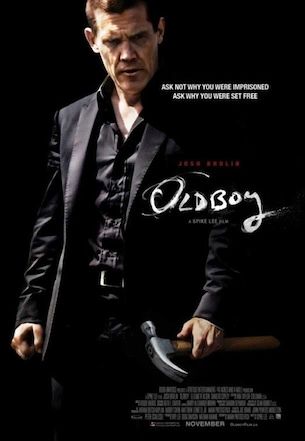
Spike Lee's Oldboy. Please Hammer, Do Hurt 'em.


So, my entertainment blog took me longer to get jumpstarted than I imagined. It's a long story followed by a long story followed by a long story and I already have a long story in front of me: Talking about Spike Lee's Oldboy.

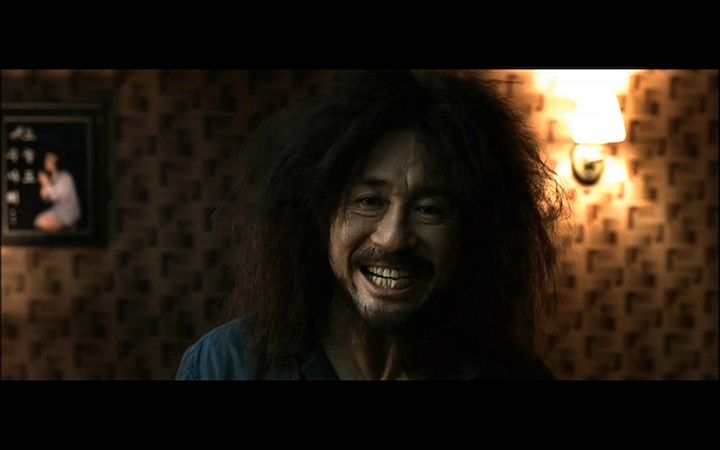
Somewhere between ten years ago and today, if you were a movie guy like me, eventually someone would come up to you and say, "Dude dude dude, you've got to see this! It's Asian and fucked up… but it's totally AWESOME!" That movie was usually 2003 Korean movie Oldboy (Though I'm sure I can think of about a hundred other things that could fit), and oh, is it ever all these things and more. Director Park Chan-wook's film is a masterpiece of pitch-black revenge that only shows mercy when mercy would be the cruelest thing to deliver. Main actor Choi Min-sik's all-in performance where he even goes as far as to eat a live squid on camera is well worth the watch by itself.


Now, a good amount of us don't really talk about it much except it's about a man who is imprisoned for 15 years and goes on a journey to figure out why, maybe some of us would share a Youtube video of the hammer fight, but being tight-lipped because the movie really is something where you need to EXPERIENCE without anyone getting too far into telling you why. Oh, and we really want to see your The Ring face when it's over. Critics who deride it for being senseless violence and torment at the service of nothing deeper are kind of missing the point. It lives within the minds of the captor and the prisoner;they are both completely unhinged and so is the movie. 

So, naturally, when an American version was announced, the question wasn't *if* they were going to screw it up, but *how many ways* they were going to do it. They seemed to hit two right off the bat when it was announced Steven Spielberg and Will Smith were the director/actor combo. Spielberg can do dark revenge as he's shown with Munich, but nothing like this. Smith can play broken like in I Am Legend, but he also has to be a guy who can disappear for 15-20 years and then show up again and nobody recognizes him. If there's one thing that's almost impossible to do, it's not recognize Will Smith. 

I sat back and waited. I knew they weren't going to be the people who eventually made the movie because it made no sense. Eventually, people came along who did make sense: Spike Lee and Josh Brolin. Spike Lee's filmography is all over the place (From the essential Do the Right Thing to… She Hate Me), but among the people who have the grit and the balls to pull this off, Lee's one of the handful, not to mention Josh Brolin can pull off both a normal guy and a completely consumed instrument bent on revenge. So, I had some hope. I'm also not fundamentally against the aspect of a remake since the Korean Oldboy is a bastardization of a Japanese comic (Not called such because people LIKE it, but yeah, the movie is nothing like its source material).

Then things started happening. After the initial theatrical trailer touting an October release, publicity drifted off. The release date was quietly changed to Thanksgiving weekend (A time I'm sure all of you love your hard-R revenge thrillers), there wasn't even a TV ad of it until two weeks before its release, its release was dropped to 580 theaters, the director and Brolin weren't happy because its initial 3-hour cut was reduced to just under two, an artist who did initial mockups for the poster claims they were rejected and then suddenly used without proper compensation with Spike Lee issuing a curt reply on Twitter. In its opening weekend, the $30-million budgeted movie will struggle to make $2 million of it back. People seemed to want cancer more than they wanted to properly promote and release this movie. Surely a sign it's the biggest disaster of a foreign film being horrifically Americanized since the U.S. version  The Vanishing had the main character rise from his grave, right?

Well… not really( Six paragraphs in and I'm finally talking about the movie! This blog's not called "Too Few Words," is it?). If this movie had been properly promoted and released in a decent slot, it might've made its money back with very little bad blood except for what gets spewed on screen. It wouldn't have had nearly the amount of bad buzz, the controversial aspects would've fallen under the idea of, "There's no such thing as bad publicity," and life would've gone on. Now, is it a worthy re-imagining that can properly stand next to its Korean counterpart? Well… not really.

Spike Lee is working in full Inside Man mode. Spike Lee has his projects he puts his soul into and ones he crafts extremely well because it pays the bills but doesn't put his full heart into it. This is one of the latter. As much as people like touting Inside Man as this underrated classic, it's a pretty good little puzzle box of a heist movie but because of it, it keeps its distance from the characters aside from Clive Owen's thief who seems to be WAY too into how clever he is. However, even Inside Man has the context of how people interact in the melting pot of New York City in a post-9/11 environment. It also has this Bollywood fusion of a song in its opening credits which is so one of my jamsOldboy is devoid of such context to help fill in the gaps. 

Oldboy is simply the story of an asshole alcoholic ad executive named Joe Doucett (Brolin) who makes life hell for everyone, especially himself. After a particularly bad drunken bender, he wakes in a locked hotel room. He receives daily meals of dumplings, Frosted Flakes (Really, Kellogg's? Product placement in THIS movie?), and vodka while occasionally getting hit with knockout gas so his captors can do anything from shave him to patch him up when he punches a mirror). His only companion is the television in which the often humorous side effects of this seen in the Korean film are missing here. It mostly acts as delivering indications of time passing and plot information, like Joe being framed for the rape and murder of his wife, though there is a particularly vicious moment this movie has over the Korean version where Joe finds out what happens when he tries to befriend a rat to quell his loneliness. 

Twenty years pass and Joe is tossed out into the world in a steamer trunk with cash, clothing, and a smartphone that has wallpaper of his daughter's face and a clock countering down to four days from his release (There's a clear sign of the deep cuts in editing when Joe knows how to slide the touch screen to accept phone calls on his smartphone, but he later doesn't understand why there are no pay phones and Yellow pages anymore). Free of his alcoholism and obsessed with proving his innocence to his daughter, he recruits his best friend Chucky (Michael Imperiori) and a homeless shelter worker Marie (Elizabeth Olsen) who takes pity on him to figure out who did this to him and why. It doesn't talk long for a menacing voice (Sharlto Copley) to start flooding his smartphone and give him a few helpful hints and not-so-helpful taunts.

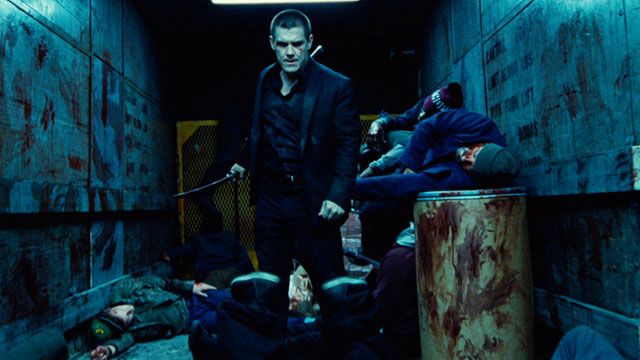
While Spike Lee may be just doing his job, Josh Brolin brings it. Brolin can't be the same guy as Oh Dae-su from 2003's Oldboy and this movie knows it. Oh Dae-su is a pathetic man before his imprisonment who, despite having a bright and humorous side, is an alcoholic marshmallow of a salaryman. Josh Brolin is a harder slab of beef and when the movie has to show Joe being physical, well, let's just say there are more than a few, "Oh, SNAP!" moments. Sometimes literally. When Oh Dae-su tortures the manager of the "hotel" he was imprisoned in, he's nice enough to pass him off to his gang waiting in the hallway so their boss can get a blood transfusion before Dae-su squares against all 25 of the gang members. Joe is not such a gentleman. He also eats up and spits out any notions of this internal monologue shit.


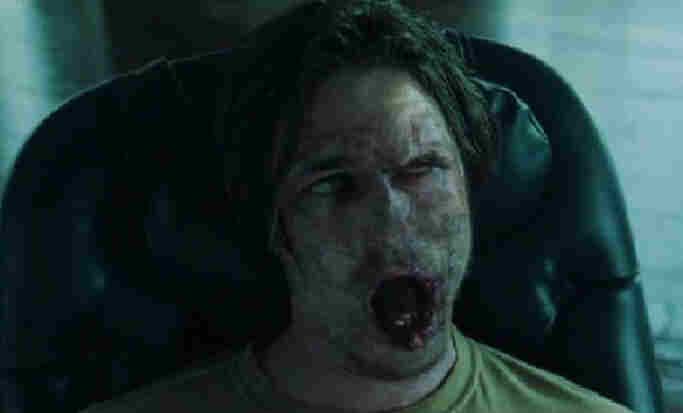
Doucett's madness is far more internal and compact than Dae-su's insanity where it practically spills out into his face and Brolin infuses the character with the right amount of quiet intensity while still being able to elicit sympathy. The rest of the actors more-or-less get the job done. The only thing is Copley as the mastermind behind Joe's captor lacks a certain amount of threat. The Korean villain is equally effeminate and even wears a sun hat in one of his scenes, but still manages to convincingly keep his former prisoner at bay. Even with the gender-swapped badass bodyguard/sex partner, the American villain lacks a certain amount of bite, like if they'd cast Ralph Fiennes if he hadn't ever played things like a Nazi sniper or Voldemort. In fact, why didn't they get Ralph Fiennes? 

As for the rest of the movie, the word that comes to mind is "professional." It's professionally made and it feels like solid craftsmanship. There's nothing "bad" about it, but the thing is it needs a little more than to be a nicely-constructed cabinet. All of this may be from cutting down Lee's initial version, but it seems to not give much care about mood, which is one of the things the 2003 film excelled at. The Korean Oldboy could ratchet up tension and excitement when it needed to, but it mostly ruminated in the mood of a man who had nothing but long strings of time for years. The editing used a lot of fades and the music even utilized a lazy woodwind instead of something more typical and it worked. It marinates the emotion that adds flavor to it when it becomes serious business. The 2013 version wants to stay on task, it cuts through everything it needs to, and even makes the passage of time seem wonky, especially when Joe is imprisoned. It feels like four years pass like it was four days and there are weird realizations made at what feel like odd times (It's four years in when Joe discovers the hidden camera? Wouldn't he know every inch of that damn room by then?). When Samuel L. Jackson appears to take a Samuel L. Jackson role over 20 years, the only physical thing that changes about him is the color of his mohawk.

There's also that certain Hollywood gloss that gets on a lot of things. Spike Lee replicates the hammer fight from the Korean version in an accelerated version because Joe has leveled up about 10 times higher than Oh Dae-su and has no problem with sending every single gang member to hell, but the hallways feel more like a set and the action more artificial even as it's more brutal. The hole-in-the-wall bar Joe hides out in also is supposed to be this community of regular customers, but nobody notices when the fey British guy and his bodyguard just honker down for however long they've been there in one scene? Are Ron Burgundy's buddies also playing pool slightly offscreen and they haven't noticed that, either?

Maybe, even as someone who can accept the concept of a remake, I'm too close to the other movie. You'd probably need someone who has never heard of the Korean version and is going in knowing nothing to get just the right opinion on how the plot twists worked for them and shocking the surprises were.  It certainly has the guts and gumption of its Korean counterpart-WAY more than even I thought they would do-and they have the ingenuity to change things in meaningful ways and make some moments their own. I dare say the American ending's final shot is pretty much the perfect way to finish this story. Still, that means a lot of the plot is familiar to people like me, so aside from the curveballs Spike Lee throws in with a smile, it's hard to judge plot twists when they've already surprised you.

That said, Spike Lee's Oldboy seems to operate with a safety net, where no matter how shocking and horrific the actions are, there's only so much damage it can do. It's not bad per se, and I'd recommend checking it out if you have the stomach for a hard R violence and psychological damage, but dude dude dude, if you have Netflix, you should totally check out the Korean one right now! It's kind of fucked up and weird, but it's SO awesome! 

Saturday, July 3, 2010

An Explanation

Hi. I suppose I should introduce myself and say what I'm doing here in this tiny, one-bedroom corner of the Internet that's annoyingly right next to laundry room. I'm Joe, and it'd be more beneficial to say what I've been than what I'm doing right now. I used to be the head of a foreign/independent/foreign film group in college, I used to be a film critic for a small Nebraska city (Yes, 27,000 is large for Nebraska, but on most portrayals of "small town" in television shows from Twin Peaks to........ uh, the 50 shows that tried to rip off Twin Peaks, the number is around 50,000), former intern for a now-defunct anime magazine, and other odds and ends. It's not really for bragging rights. I wasn't really all that and a bag of Kettle Cooked BBQ chips (I hate to product place, but they're so good) in most of these tasks, but it's more to establish my mindset. I love movies, I've dabbled in anime, and I think I go beyond a casual viewer in either.

I've always wanted to discuss these things at greater length than I've had the leisure to in my life. Not that I've been exceptionally busy or engaged in other things, but it seems there's never the right time to really talk the deeper meaning of things. That's not to mention I've found in my early 20s I have ADHD, so God or mother nature or chance puts a lot of pennies on the track of my train of thought. Writing's always seemed the most natural outlet, but even then, it takes me awhile to construct what I mean. This paragraph, for instance, took 20 minutes of milling about to reasonably assemble what I'm trying to say, and even then, I'm not happy with it as it currently stands and have to resist the urge to delete it all and start again.

My goal here is to open up my thoughts on various pieces of work from film to anime to other stuff I don't have much experience talking about (For instance, my fandom of abstract electronic artists Underworld. Much of their music creates images, moods, and moments from fragmented streams of thought that's extremely difficult to describe and even harder to discuss). What I hope is this will help bring together my inner thoughts in a more compact way, and hopefully bring myself together a little better as well. I had someone tell me once something along the lines of, "You are brave and you are intelligent. Unfortunately, you are never both at the same time." Wouldn't it be nice to be both simultaneously? And hopefully, I get some people I can discuss these things with. I'm not counting on it, but it could happen.

What I plan to start with is stuff I feel has been overlooked or simply not looked at at all. Hence the title "Entertainment from the Abyss" Now this isn't always going to be things I admire. There are sometimes good reasons why things get overlooked. Maybe later we'll get into more well known things (I was one of THOSE college students who had a million theories about David Lynch's Mulholland Dr., for instance), but for now, this is probably a good enough start so I don't bite off more than I can chew.

I probably had a few more reasons for this, but to quote Forrest Gump, "I just felt like running...."